Inspiring Women

glass ceiling

It’s International Women’s Day tomorrow. Sadly, I’m not going to write about Frida Kahlo, Marie Curie or Emmeline Pankhurst. I’m writing about a very depressing University held event that I went to recently entitled “Inspiring Women”.

It was part of the University’s on-going initiative to encourage more female scientists to remain in academia given the Government’s concern that there is an attrition of women as you move from the bottom to top in academic science. It is not just in science that the gender gap is seen but across academic disciplines. Despite the proportion of female academic staff in the U.K. being close to equitable to males (around 45%), the proportion of female professors remains low ( a dismal 19.8% of all professors). It’s no surprise then that close to a third of men in academia are in the well paid academic positions (earning > 50K), whereas this figure is only at 17% for women (ECU, 2012). You don’t even want to know the figures for ethnic minority women.

There has been much interest in finding out the reasons for this drop out. The Ivory towers it would seem are just as hard to get into as the FTSE 100 Boardrooms. Why? Just like in FTSE 100 companies, where the foot soldiers are high in oestrogen; there are plenty of XX science PhD students. Of my peers, I know 3 talented women who completed science PhDs. One, graduated top of her year in Natural Science at Cambridge with the highly coveted and rarely achieved triple first, another graduated with a first class degree from University College London. The third studied her PhD at Cambridge University. Are these 3 now all Senior lecturers or Readers en route to the Professorial track? No. They have all left academia.  They are all married with children. They are all science teachers.  This is great news for teaching and I am sure they are fabulous teachers, but given that teaching was the available career option for women 50 years ago, why has nothing changed since then?

The event got off to a bad start as it was obvious from a quick look around that there was not one Y chromosome in the room. Clearly from the institution, and society’s point of view, encouraging women to succeed in their careers is much like breast-feeding. It’s “women’s business” and men need not get involved. Women’s failure to succeed in the workplace is clearly down to them and there is nothing men can do to help this situation. Proceedings took an ironic turn as the Chair that was introduced was an ex-colleague of mine who by chance I had bumped into a month earlier. I had last heard that she had become a senior lecturer, was the “right-hand” lady to a recently knighted Professor and was touted for great things. I was therefore surprised and saddened when she told me that she had resigned from her academic position at the University because of the unsatisfactory work-life balance and unsupportive institution in which she worked. One could only be somewhat sceptical then about her putting on a cheery face to “inspire” other women.

That aside, we were then treated to the career stories of 4 female professors. It was interesting to hear the struggles that my forebears had endured in order to achieve their current Professorial positions. One Professor was required to return to work a few weeks after giving birth and to prepare data for an international conference in the first few months following childbirth. She talked about taking her child with her to international conferences, and when she had difficulties with childcare, her child played under her desk at work.  All 4 professors were clearly remarkable and driven women and had made personal sacrifice to achieve their positions.

However, I was grossly disappointed in their summation of strategies for success. Even when I posed the question of what institutions could do to support women in academia, all 4 professors deferred to personal attributes required for success, emphasising the need for “dedication, passion, perseverance and strength of personality”. One went as far as to say that “If you want to make it in science, it has to be your single passion. You cannot for instance be passionate about science and architecture; it has to be science alone.” Another Professor talked about how finding a “niche subject”, “that nobody else was interested in” had helped her get to her position as she quickly became a leading expert.

Maybe there is something wrong with me, but I found these messages deeply depressing rather than “inspiring”. I felt that clearly unbeknownst to the organisers, it was exactly this mantra that has been putting off generations of female scientists.

I could totally understand that these were things women had to do 20 years ago in order to get ahead in a “man’s world”, but surely this does not apply to the here and now?  Are women still excluded from major and competitive fields of science such that they are required to seek out an uninteresting niche in order to succeed? Why should women not aspire to succeed in a major area of science? What if your “other passion” is family? Whilst I agree that to succeed in any walk of life passion, perseverance and determination are required, can it be that women are so much less “passionate, determined and persevering” than men…? I feel we need to get beyond talking about personal attributes and thinking about systemic, cultural and institutional solutions. We already know most women undervalue themselves anyway, so the emphasis on personal attributes just means that women drop out saying and believing “I’m not passionate or committed enough” when in actuality they have as much passion and commitment as their male colleagues but systems and culture are against them. How many male Professors were the main caretakers for their children or elderly relatives, might this not impact on commitment and dedication? Shouldn’t we be discussing why these roles can not be fulfilled by men when we talk about barriers to female success?

The event soon went from bad to worse for me as we went on to breakout tables to discuss issues more intimately. I had an unfortunate clash with a Professor who compared my juggling parenting, clinical work and academia with her juggling her career with her desire to exercise (as she had no children). Aside from exercise and sex both being choices, I cannot see any comparison between parenting and exercising. One is a responsibility; the other is a leisure time activity with some health benefits. In addition, insomuch as good parenting leads to well-functioning children and adults, there is a societal benefit as they will be the people paying for our pension and healthcare as we age, whereas exercise has only individual benefit. Whilst the comparison is ridiculous to me, it was shocking and demoralising to realise that this is the view of some intelligent women who have made it to the top. And it seems that I am not alone in my feelings as research shows that women do not just need “role models” and “mentors”; they need the right kind of role models and mentors and are “put off by successful female professors who are seen as aggressive and competitive, and are often childless”(The Guardian, 2012).

Other advice from senior women I have had included: “It’s hard, but we just have to get on with it”, which was comforting until I found out that she had put her own children into boarding school so that she could “get on with it”. Many others have offered support by saying “You’ll never regret time spent with your children”, which is supportive and appreciated, and yet for some reason I had a nagging “doomed” feeling about this kind of advice. For a while, I was unsure why, then I realised, it is these supportive words that perpetuate the myth of maternal responsibility which acts as the source of guilt that is eroding female careers. I can bet no one is encouraging my male colleagues to go part-time to spend “unregrettable” time with their children. Yet, why not?

I left the event after this, but I hear it was “a great success”. The majority twenty-something audience lapped it up with their wide-eyed enthusiasm, much like I would have done a decade ago. Little do they know about the choices they will have to make a few years down the line, oblivious to the fact that the majority of them will soon be lining up to teach secondary school science.

The problem of course is not unique to academia. My husband, a banker, hears women talk about this all the time in banking. What then, can be done to retain more women in science, academia, banking, law, politics? The right role-models? Gender sensitive leadership? Varying management styles? Emphasis on quality of work rather than quantity? An end to “presentee-ism”? Increased availability of part time senior positions? I don’t have the answers, but I do know that it is beyond personal ambition, and will involve changing long established systems and cultures, in the workplace, in society, in families. Institutions need to stop thinking about ways to encourage women to change, and think about ways in which they can change to allow women to succeed. I know that “systems and cultures” may be too great a task to take on, but one might hope that the brilliant women who have already made it to the top, along with their male colleagues might be able to attempt to take this challenge on.

Now that to me; would be truly inspiring. 

ECU 2012: http://www.ecu.ac.uk/news/targeted-action-needed-for-greater-impact

Guardian 2012: www.theguardian.com/higher-education-network/blog/2012/may/24/why-women-leave-academia.

What is ADHD?

Planes ADHD

ADHD stands for attention deficit hyperactivity disorder. When I tell people that I am an ADHD specialist,  the next question is usually, “What is ADHD anyway?”. It then turns out that the common conception of an ADHD child is of a naughty boy running around the place, and that the common misconception of treatment is of medication to “calm the kid down” or “sedate him”. So to set the record straight, ADHD is primarily a brain disorder that makes focused attention difficult. The hyperactivity is secondary. It is caused partly by genetic factors, and partly by environmental factors. The environmental factors that are important are usually those around pregnancy, birth and early infancy.

I could talk about symptoms and signs, dopamine receptors, synaptic disruption in the fronto-striatal pathways, but you can get that information from any google search. I don’t think that that will help you understand ADHD or its treatment. So instead, I am going to talk about air traffic control. It’s a long analogy, I apologise, but if you bear with me, you will understand more than most medical students about ADHD and its treatment.

You are watching planes at Heathrow airport. The planes are not behaving as they should for some reason. Pilots are circling the landing strips at random, flying very fast at times and almost crashing in an uncontrolled manner. Sometimes multiple planes are attempting to land at once and sometimes planes are adjusting direction and altitude quickly to avert a crash. There doesn’t seem to be any order and the planes will cause a major accident if they don’t slow down. Your first instinct to solve this problem may be to tell all the pilots to reduce their speed. “Pilots, stop being so ‘hyperactive’, slow down!” Sure, that has stopped the pilots whizzing around causing accidents, but it hasn’t improved their ability to land planes. Now, they are slowly and lethargically circling the airport at random. They don’t crash because they are going so slowly, but they don’t do much else either, they don’t know where and when to land.

If you were to go to the air traffic control room and see what was actually happening, you would come up with a better solution. At air traffic control, what you find is that half the staff have disappeared (there is an economic downturn you know), and the remaining staff have been replaced by pimple faced 16 year olds. Each child is looking at 6 screens with two head phones on with pilots shouting at them “Tell me what I do now? What do you want me to do now?” Most of the kids are completely overwhelmed, and banging their heads against the wall. Some are up to the challenge and attempting to land planes, others are shouting random orders based on knee jerk reactions.

Now what is your solution?

From this vantage point, you can clearly see that the pilot’s speed is not the issue. What is the issue is that the control room is ineffective. It is under resourced and has not been taught how to deal with multiple demands on attention and how to organise the information it is getting in order to achieve a goal.

There are 3 options:

1)      Re-employ the senior management of the air traffic control room to train the 16 year olds in air traffic control. This will take time, money and a lot of effort. You are still in effect operating with only half the staff, but with time, the senior managers will be able to train the 16 year olds, identify their strengths and weaknesses, motivate and organise them into a team that can effectively manage to land planes, forever. The managers must be committed, able to deal with frustration and most of all, not give up.

2)      Call in the cheap immigrant labour from Planet Zog. They will arrive en masse in the morning; land all the planes for you and then blast off in their space ship again at night for next to no money. They only speak Zog, so they cannot train your staff. They also like to pass wind and can make life slightly unpleasant while they are around.

3)      Do nothing. Let the situation “muddle through”. There can be two outcomes for this strategy. The 16 year olds may learn slowly from experience and mature into men and women with greater experience and knowledge to be able to land planes on their own. They might crash a few planes, but at the end, emerge mature and competent. Alternatively, the 16 year olds may lose hope. They crash a few planes. Initially by accident. They get lambasted by the press “You useless people, you good for nothing kids. Why can’t you even land a plane?” They crash a few more planes. They decide this is kind of fun, and deliberately crash planes.

Hopefully this will help you to understand that ADHD is primarily a brain disorder, not an “energy” disorder. The control room is the brain, the staff are neural circuitry. The focus in ADHD should be on “Attention deficit”, not the “hyperactivity”.

In ADHD the brain is under functioning, it is unable to organise or prioritise the stimuli it is being constantly fed. It cannot attend to one thought, or follow through on one action, because it is constantly distracted by other thoughts and stimuli. The result is endless non-goal oriented activity; purposeless movement; hyperactivity. Activity itself is not a problem. Endless goal-oriented activity, purposeful movement to multiple demands is multi-tasking, is productivity. Sedation is not the solution. This will slow the brain and body down so that damage will not be caused, but nothing will be actively achieved either. The solutions are:

1)      Behavioural management training. This can only realistically be done by parents (with training and support from teachers and psychiatrists/ psychologists). Done well, it can train the child to function at an appropriate level, and motivate them to attend. It is labour intensive, takes time and is expensive. It requires a lot of work and dedication from parents, but can offer long term change. In a randomised clinical trial of behavioural management training against medication, behavioural management produced equal results to medication, few side effects and with longer lasting effects (MTA, 1999). This is why NICE (National Institute of Clinical Excellence in the UK) guidelines suggest behavioural management as first line treatment for ADHD. Unfortunately, much of what the NHS is currently providing in terms of “behavioural management training for ADHD” (if it is even provided) does not match the behavioural management training given in the clinical trial. In pragmatic studies (studies using real life clinics, and unselected patients rather than well-funded research teams with patients recruited for commitment) there is little evidence for benefit of behavioural management. The problem? Cost and parental resources.

2)      Medication. This is typically in the form of a stimulant, which stimulates the brain to work. Most of us are already taking a brain stimulant everyday to help with our functioning on a daily basis. Caffeine. Caffeine is in the same class of drugs as methylphenidate (the main ADHD medication), cocaine and amphetamines. Methylphenidate does not cause highs or addiction at doses prescribed in children for ADHD treatment. It can be abused which is why it is a prescription only medication and prescribers will not prescribe it to children whose parents are known drug users. Medication is a cheap and fast solution, but once the medication is stopped, the benefits are also gone. It can sometimes be a good strategy to use medication to allow children to begin participation in behavioural management training. Some children will experience side effects. The tolerability of the side effects is variable between individuals. About 30% of children will not respond to methylphenidate. Good clinicians can get good outcomes from medication prescribing. Bad clinicians; are bad clinicians.

3)      Do nothing. Attention levels in the general population increases with age (see my post on attention), and this is no different in children with ADHD. By late adolescence, some children’s attention will have improved to the extent that they no longer fall under the category of having ADHD. By late adolescence the requirement to attend school and formally pay attention for long periods of time is over, and many adolescents with ADHD choose occupations and pastimes that require less focused attention. Thus, their relative attention deficits have less impact on their lives. Only around a third of children progress from childhood ADHD to adult ADHD. However, there is also high downside risk related to the “do nothing” option. We know, that a significant proportion of the “do nothing” group end up being marginalised from school, singled out and scapegoated by parents and teachers and bullied by peers. The impact of these experiences is highly damaging to children and can lead to additional mental health and social problems with more serious consequences than just inattention. ADHD is related to higher rates of conduct disorder, depression, personality disorder, drug abuse and criminality.

Treating ADHD, by whichever method, is not really about “calming children down” as is commonly perceived. It is about allowing potential to be achieved and preventing conduct disorder, depression, personality disorder, drug abuse and criminality.

I know that ADHD is a highly emotive topic for many, so please feel free to air your views.

References:

The MTA Cooperative Group (1999) A 14-Month Randomized Clinical Trial of Treatment Strategies for Attention-Deficit/Hyperactivity Disorder. Archives of General Psychiatry. 56:1073-1086

Why do gender stereotypes still persist?

porridge
Recently Big Sis was cast as Mummy Bear in her class assembly. We were asked to provide at short notice (always at short notice!) a costume. Thankfully, the school were making the masks for the children, so that was not required, and as the school assembly is not such a big deal, it wasn’t so big an ask. I went with Big Sis to her dressing up box to see what we could find. Brown, long sleeve T-shirt, brown tights, pink skirt. Good, good. But these were just normal clothes. How about some dressing up stuff so Mummy Bear can be more of a character?

Here is our conversation:

Me: I know, I know [excited], why doesn’t mummy bear be a doctor and then you can carry this bag and wear this stethoscope around your neck?
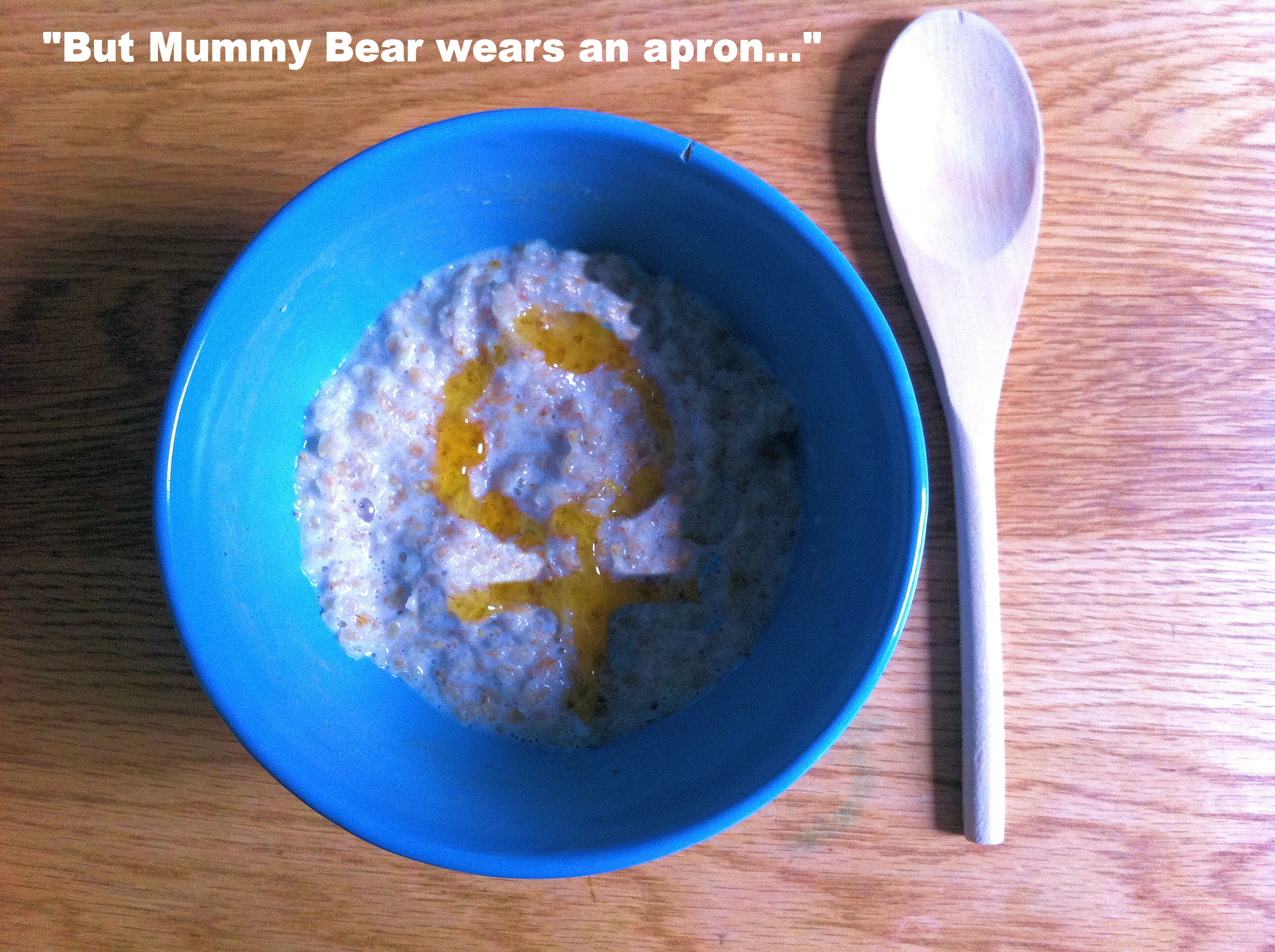
Big Sis: But Mummy Bear wears an apron.
Me: She doesn’t have to, she can be a doctor. Or, I know, you can wear this fireman’s costume and Mummy bear can be a fireman.
Big Sis: Mummy bear wears an apron, because she makes the porridge.
Me: Are you sure, maybe Daddy Bear made the porridge. Your daddy makes you porridge and pancakes sometimes.
Big Sis: In the book at school, [insistent] Mummy bear makes the porridge and wears an apron.

Big Sis wore an apron.

This is the most recent in a long line of unsuccessful attempts by me to break the gender stereotypes prevalent in society.

The first was just before Big Sis’s third birthday when the nursery decided to have a whole week (!) of fancy dress. This must have been a sadistic joke on the nursery’s behalf as I saw poor children being trundled into nursery for 5 whole days wearing the same Spiderman pyjamas with working parents looking very displeased. I was also a full time working parent at the time and shared the same displeasure, but vowed that we would at least attempt 5 different costumes, however crappy. She was not yet 3 years old, so at that point in time I was still winning the war on polyester Princess dresses. The first day, she went as a cat. We had a foam-cat mask from some party she had been to, and she wore a black long sleeved T-shirt and black leggings. The second day, I had decided that she could go as a Pirate. She had a jumper with a skull and cross bones on, denim shorts and she could put a handkerchief around her head. I managed to coerce her into this outfit. She was not happy. I promised her chocolates when she got home.

Big Sis: I don’t want to be a pirate. They are boys.
Me: No, there are girl pirates as well, pirates aren’t just for boys.
Big Sis: None of the other girls will be pirates.
Me: Well, it’s nice to be something different.

I had got her to the door by now, although she was dragging her heels and not wanting to cross the threshold into the outside world. Eventually, she slumped down across the doorway in tears.

Big Sis: Why can’t I just be a Princess like everyone else?

This was too much for even a feminist like me to bear. I became tearful. Was I really going to force my daughter to do something against her will and want based on my own ideology? I made her go as a pirate but promised that she could go as a Princess the next day, and that was how the war on pink polyester was lost.

The second, was when Big Sis requested a pink stethoscope for her 4th birthday. I went to Toys R Us to purchase said stethoscope only to find that the only pink stethoscopes that they had were attached to a nurse’s uniform. The doctor’s costume was resplendent with blue stethoscope. Hmmm. I literally stood in front of the costumes for hours deliberating in my mind. Should I buy the doctor’s uniform and encourage breaking stereotypes so that she might aspire to be a doctor like me, rather than a nurse, or is it too much hassle to risk tears on her birthday and screams of “I wanted a pink one!”. There were no tears on her birthday.

The third time was when Big Sis and Lil Bro were playing together. Here is the conversation:

Big Sis: You be the doctor and I’ll be the nurse.
Me: Wait, why can’t Lil Bro be the nurse and you be the doctor?
Big Sis and Lil Bro in unison: Because doctors are boys and Nurses are girls!
Me: [in disbelief that this is happening in my own household] No they are not! I am a doctor and I am a woman.
Big Sis and Lil Bro: [look at me silent for a moment as they ponder this puzzling conundrum]
Big Sis: Yes, but he wants to be the doctor and I want to be the nurse. Anyway the nurse’s uniform has a skirt so it is for a girl.

Damn Toys R US! I knew I shouldn’t have bought the pink stethoscope!

I was glad to hear more recently that Toys R Us and other toy retailers are rethinking their gender stereotyped toys. I haven’t been recently to check out if they now sell doctor’s costumes with pink stethoscopes. For my children it is too late. What I worry about is this:

(1) If role models of working mothers and domesticated fathers are clearly available in the home, gender non-stereotyping is being actively pushed at home, how is it still not getting through that women and men can be whatever they choose? I have noticed that media portrayal of genders, at least on CBeebies (which is my children’s main exposure to media up to now) is pretty fair so the easy target of media, is not at fault this time. (Dr Ranj is male, but Nina (“Scientist”) is female and there is a female doctor and male nurse on “Me Too”). So where is this stereotyping coming from?

(2) If my children, who are the next generation, are still growing up with such defined gender stereotypes, where does this leave feminism? Has so little changed in the 30 years between myself and my daughter? Given that my children have already bought into gender stereotypes, will they be able to be stronger than me and insist that their children are brought up gender-stereotype free? Will we have to wait until our grandchildren’s generation to see if gender stereotyping can be beaten?

In my mind, the problem is so pervasive which is why it is so hard to beat. It goes beyond “pink” and “blue”. Every traditional tale and history lesson is encoded gender stereotype. Every advert from Barbie to Iceland (Why doesn’t bloody Dad go to Iceland and get the frozen goods for once?) is encoded gender stereotype. Every word we choose to use is gender stereotyped (ambitious men/ pushy women). My view is that language is a good place to start, as it is the fabric of our culture and society. To this cause I hope that you will appreciate that on this blog, where I mean “parent”, I use the word “parent”, rather than “mother”, which cannot be said for the majority of parenting scientific papers, news articles, websites and media.

There’s also very little pink.

How to improve your child’s success before they are even born: Part 2

Pregnancy meds

In part 1, I talked about genes. Now I will share my thoughts on the other major player: environment. Most people think of environment as the family you are born into and the community and school your child belongs to. Actually, that’s all window dressing compared to the environment that you are providing in your belly! Whilst you are chomping into bacon sarnies, struggling to pull up maternity jeans that won’t stay up and mapping out where all the pregnant-lady friendly toilets are on your route to and from work (thanks Premier Inn Belsize Park!), unbeknownst to you, you are already determining your child’s future.

The bad thing about medical training is that you are all too aware of what can go wrong. Pregnancy is generally viewed as a “magical” time; the miracle of new life being generated from within your body. Paediatric cardiologists however, will start wondering whether a congenital heart malformation is present in the foetal heart beat they are hearing, an orthopaedic surgeon might worry about detecting clubbed foot in the fuzzy ultrasound scan. From the view of the child psychiatrist, forget extra digits and cleft palates, it’s all about the brain and the mind. The good thing about having medical training is that you can spot the bullsh*t that is out there in terms of pregnancy health advice. A pregnant woman is like a goldmine. While women may feel guilty about spending money on themselves, parting with money for the benefit of their unborn baby is totally justifiable and guilt-free. It’s no wonder that the health food industry piles in on this market.

In a recent study in New Zealand (Jeffries, 2012) a researcher in true Ben Goldacre style went to 21 health food shops and 21 pharmacies and asked for advice on morning sickness and what she ought to take for nutritional supplementation for early pregnancy. The recommendations were noted and any endorsed products were bought and ingredients compared with official health guidelines. Only 23.8% of pharmacies and 4.8% of health food stores made recommendations for Kate Middleton style morning sickness in line with official guidelines and 66.7% of pharmacies and 33.3% of health food stores recommended buying products, often branded to target the pregnant mother market, which were contrary to guidelines. Almost 10% of pharmacies and double this number of health food stores gave advice on nutritional supplementation with the potential for vitamin A overdose! Pharmacies were good at recommending folic acid supplementation, but fewer than 50% of health food stores got this vital message across.

folic acid

If you haven’t heard of the need for folic acid supplementation (400 micrograms a day) pre-pregnancy then there is a really big problem in the dissemination of this public health message. Like the ills of smoking and the benefits of sunscreen, there is little scientific dispute about the benefits of folic acid supplementation in pregnancy in the prevention of neural tube defect. What the hell is a neural tube? Well, once the egg and sperm unite to form one cell with a complete set of DNA, it starts to reproduce by dividing into two, spawning 2 then 4, then 8, then 16 cells. Pretty soon, you have a big blob of cells called a morula (named after a blackberry as that’s what it looks like). Once you have a big enough blob, cells start to differentiate into the precursors of body organs. At around 3 weeks of pregnancy, the cells which will form the brain initially form a 2 dimensional sheet which then curls around on itself to fuse into a 3 dimensional tube: the neural tube. This tube becomes your nervous system. One end of the tube will become the brain, the remainder, your spinal cord. As everything else “brain” is formed from this initial structure, problems at this stage can’t be glossed over or compensated for.

Imagine trying to make a rocket from a flat piece of cardboard. You roll the thing up then tape it along the seam. Now, if you run out of tape, and tape just the top and bottom, you have a gaping hole in the middle. If you tape one end, you have a gap at the other. It doesn’t matter what flashy cone nose you put on the rocket, its decoration or fancy tissue paper flames, the crux of the problem is you have a gaping big hole in your rocket, and that is essentially what a neural tube defect is, a gaping hole in your brain -spinal cord system. It happens in 1 in 1000 live births in the USA (NICHD 2012), but risk is massively reduced by having enough folic acid and vitamin B12 around at the time of neural tube formation. This happens at 3 weeks, often before people even know that they are pregnant, which means that unless you have been organised enough to be taking daily folic acid before conceiving, your child’s brain formation may have been determined before you even knew you could have the most significant impact.

In my mind, it’s not just to prevent a massive hole in my child’s brain; I am not very worried about a 1 in 1000 risk as this is pretty low. If my son were competing against 1000 other children for one place at that elite prep school, I wouldn’t really fancy his chances, so why worry about this level of risk? The reason I think folic acid is important is that I want to optimize brain development in my children as best I can. The majority of medical conditions are dimensional meaning that there is a continuum of damage or impairment from minor to major. Take a burn. You have a range of tissue damage from slight redness on the skin to a fourth degree burn where the burn has gone down through all layers of the skin into bone and muscle. When you have a fourth degree burn, it is without a doubt that other tissue will be damaged with lesser graded burns. What does this have to do with the neural tube? Well, the way I see it, a severe disorder like neural tube defect is your fourth degree burn. The risk of neural tube defect is low like for a fourth degree burn, but I don’t just want to prevent a fourth degree burn, I want to prevent any redness at all which in brain terms would mean any even mild problems with attention, irritability, emotional regulation, planning, memory or motor control. The risk of getting things sub-optimal at this stage of development may impact brain development even if it doesn’t result in a full-blown neural tube defect.

More recently research has headed this way. Spurred on by the well-known protective effects of folic acid on one brain development disorder, researchers (Suren 2013, Roth 2011) have conducted association studies using large cohorts (samples of over 85,000) of Norwegian mothers and babies and found associations between peri-conceptional folic acid supplementation and reduced levels of severe language delay at age 3 years and autistic spectrum disorder. Association studies can never confer causality or effect, but given that folic acid’s status in prevention of neural tube defects is pretty much established, any potential additional benefits are good extras. Thus, in my view, sod the dilemmas about private/ prep or state school, the biggest impact you can make on your child’s brain function is invest in folic acid pre-pregnancy! It doesn’t matter how much you spend on software down the line, invest in the best hardware you can from the outset: a Commodore 64 cannot keep up with the latest iPad; not just in computation, but in user-friendliness and performance across the board.

As soon as parenthood was on the agenda, I switched the contraceptive pill for the folic acid and vitamin B12 supplement, that way, the daily pill popping continued seamlessly and in the event of pregnancy I was covered. I carried on taking folic acid supplements throughout pregnancy, although the critical period is before conception and the first trimester. As soon as my pregnancy was suspected, I started popping multivitamin, iron and fish oil tablets as well. The evidence that these are required if you eat healthily throughout pregnancy is decidedly ropey as most people gain sufficient vitamins and minerals in their diet. What can I say; even I was susceptible to the powers of the nutrition supplement marketing moghuls! My one defence is that pregnancy did skew my dietary preferences towards voracious inhaling of vast quantities of Kentucky Fried Chicken, Walker’s Ready Salted and bacon butties so I probably did need the multivitamins.

Presentation1

References:

Jeffries S, Healy B, Weatherall M, Beasley R, Shirtcliffe P. (2012) What risks do women face when seeking advice during pregnancy from pharmacies and natural health retailers? New Zealand Medical Journal. 125, 61-9

National Institute of Child Health and Human Development (2012). “How many people are affected by or are at risk for neural tube defects?”. Neural Tube Defects (NTD). U.S> National Institutes of Health. http://www.nichd.nih.gov/health/topics/ntds/conditioninfo/pages/risk.aspx

Suren, Roth, Bresnahan,  Haugen, Hornig, Hirtz, Lie, Lipkin, Magnus, Reichborn-Kjennerud, Schjolberg, Davey Smith, Oyen, Susser &Stoltenberg. (2013). Association between maternal use of folic acid supplements and risk of autism spectrum disorders in children. Journal of the American Medical Association. 309, 570-7.

Roth, Magnus, Schjolberg, Stoltenberg, Suren, McKeague, Davey Smith, Reichborn-Kjennerud & Susser. (2011) Folic acid supplements in pregnancy and severe language delay in children. Journal of the American Medical Association. 306, 1566-73.


How good is your child’s attention and memory?

Core Abilities

Core abilities include memory, attention span, processing speed and impulse control. These are factors that affect ability in all other areas; deficits in core ability will detrimentally affect ability on the other aspects of function.

Memory

Memory is very easy to assess as it is required in day to day life. I used to have a very good memory. My mother has a story about me when I was three years old. She met up with her brother with me in tow. As he left, he told my mother his new phone number and she wrote it down on a piece of paper. That night, when she wanted to ring him, she could not find the paper. However, I recited back to her the number that I had heard him say. It was correct. Sadly, following the birth of my children, I can no longer remember anything, which is highly frustrating.

Thankfully, my children have inherited my memory, and I often joke with them that they “stole” my memory. I first realised that my daughter had a very good memory when she was about 18 months old. I mislaid my keys. She watched confused at what I was doing as I upturned the flat, until eventually I said out loud “Where have I put my keys?” This was a rhetorical question as I did not really think that anyone would be able to tell me. However, Big Sis got up, walked to another room and showed me exactly where I had left my keys. It was not as if she was playing with them or she had seen them recently as we had been together the whole time. She had seen me put them down some hours earlier, and was able to recall exactly where she had seen me put them down, even though I could not. These days whenever I need to remember something, I just tell Big Sis to remember it and I know that I need never forget again (probably until she has children of her own that “steal her memory”).

Memory cards

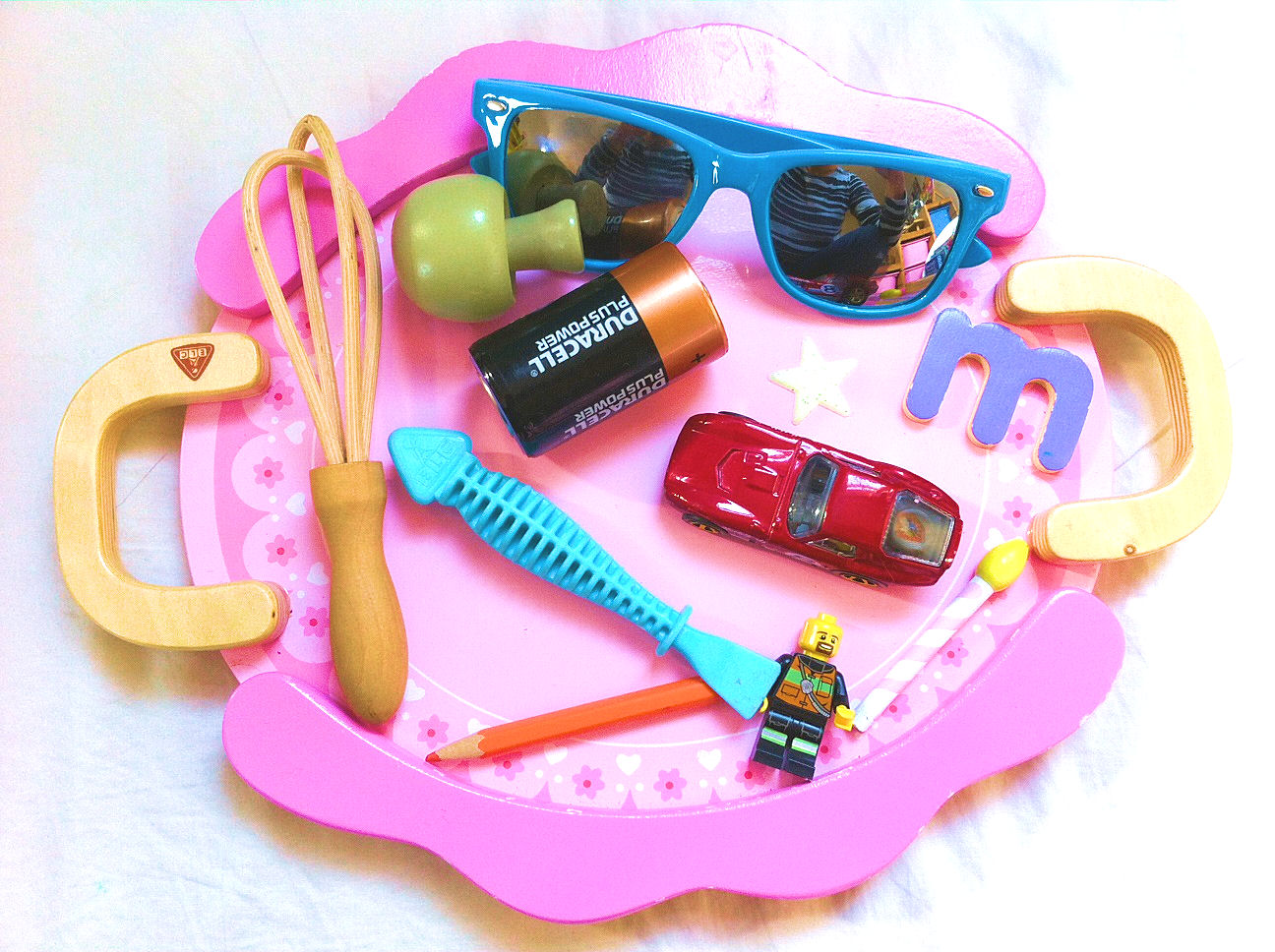
Following this incident, it is a given that any CP worth their salt would play memory games with their children. Matching pairs is a good memory game that is easy to play with children (select 10 or 20 pairs of cards and place them face down in random order, each player upturns 2 cards at a time and if they are a pair, they get to keep them, the winner has the most pairs at the end of the game). Other games that I played were putting random objects on a tray and then taking one away and seeing if they could deduce the missing object, or the game “I went on holiday and I packed in my suitcase…” which then involves each person adding to an incremental list of random objects to remember. From games such as this, it is possible to get a good idea of a child’s memory. You can of course also do the more formal testing “digit recall” as in an IQ test, where you recite a random string of numbers and ask the child to repeat them back in order, in reverse order or after a time delay. My telephone number trick as a 3 year old would have been an example of a time-delayed digit recall. A time-delayed 11 digit recall is pretty good for a 3 year old, I’m pretty sure I couldn’t do it now.

Tray before

Attention Span

Children’s attention span increases with age. An easy way to think about what the average attention span of a child at a particular age is; is to think about school lesson lengths. Educationalists through the years have structured lesson times to roughly match the attention span of the children in their class. Thus, at reception (age 4-5 years), activities are likely to change every 10-20 minutes. By Year 3 (age 7-8), lessons will be between 20-30 minutes, by year 6, 30-40 minutes. At Year 6 (age 10-11), the brighter pupils will be sitting 11+ exams which require attention and concentration for up to 75 minutes in an exam setting. By eighteen, A-level students are treated to the joys of triple maths or triple French; that is a whopping 120 minutes.

You can easily observe your child’s attention span by trying to engage them in a task they should enjoy and seeing how long they last. Which of us parents have not spent ages getting out painting equipment only to find that the child has wandered off after 5 minutes and we are left painting by ourselves. Whenever you do this, you can time how long it actually was that they were engaged in the task and at least you will be able to console yourself on the increasing attention span at each iteration while you tidy up the painting paraphernalia.

Attention span should be tested over a variety of activities, for instance drawing/ painting, puzzles, board games, craft activity, as well as on more academic tasks. Most children with even very poor attention span are able to watch TV and play computer games, so psychiatrists generally do not include ability to watch TV for hours as an indicator of good attention span.

Attention span can be trained. I remember that around the time that Lil Bro turned 1 year, I read somewhere that: children who were regularly read stories from an early age started school ahead of the class. I was already regularly reading to Big Sis but had not started as early as 1 year. Since no one ever tells you when the right time to start reading to a child is, I decided to try it with Lil Bro. On the first day, it was a disaster. Practically after 1 page of “Dear Zoo” he was off, despite my attempts to cajole and encourage him to sit for longer. I could have just given up and thought “Heck, he’s too young – it’s a waste of time at this age”, but for some reason (probably the article that had extolled the benefits of regular reading) I tried again the next day. To my surprise, he lasted 2 pages! This intrigued me enough to continue and I found that by the end of a week or so, he lasted for the whole book.

Pop quiz: Can you deduce from memory the item that has been removed since the last picture of this tray…?

Tray

Am I raising a UKIP Nipper?


ukip pic

As I was driving the children home the other day, we saw a man of African ethnicity sweating profusely as he performed his job of using a large hooked stick to manually dredge a pond to remove dense amounts of algae and pond weed. “What a horrible job!” I exclaimed. It was a statement not a question, so I did not expect any response, but to my surprise after a pause a small voice shouted back “He should go back to his own country”.

I nearly crashed the car in horror. I am sure that those words sear into the flesh of any ethnic minority person in this country and many others. When I was growing up, “Go back to your own country” was almost as popular a schoolyard taunt as “Ching Chong Chinaman”. In fact “Go back to where you came from Ching Chong Chinaman” was probably a favourite. How in heaven had I, who prided myself in liberal leanings managed to raise a child sprouting mantra more akin to UKIP (right wing political party in the U.K.) manifesto than Hampstead socialism?

“What do you mean? Why did you say that?” I asked Big Sis tentatively. Mental images of the sanctimonious telling off I was going to give to her friend, friend’s parents, teachers, babysitters, and anyone else who she might have had contact with that might have contaminated her with this right wing view.

“Because of what you said.”

“What? When?” I demanded, having never held such views in all my life.

“Two weeks ago when we were doing maths homework”

The blood drained from my face in realisation. This was the conversation that we had had two weeks prior:

Big Sis: “Why do I have to do this anyway?”

Me: “Because it’s your homework.”

Big Sis: “Yes but it’s so boring, why do we need to do maths.”

Me: “Because if you don’t learn to do maths or to read, then you won’t be able to get a good job. You’ll have to clean toilets or other people’s houses.”

Big Sis: “Does that mean Terri can’t read or do maths?”

Terri was our lovely cleaner who came on an ad hoc basis and also helped with babysitting, I certainly did not want Big Sis lording it up over her. Ferocious back pedalling required.

Me: “No Terri is very clever but she didn’t grow up in this country. So she can read and write and do maths very well, but only in her own language. Because she decided to move to this country, she can’t read or write or do maths so well in English, which is why she has to clean our house.”

Big Sis seemed to accept this explanation, so with relief she finished her homework.

From this innocent conversation, Big Sis had decided that people who had moved here from another country should go back to their own countries in order to have better jobs. Seeing the African man doing a back-breaking job, she figured that he could read, write and do maths and therefore had better job prospects in his “own country”.

From this, I concluded: IT IS SO HARD TO EXPLAIN SOCIAL PROBLEMS TO CHILDREN!

Give me scientific questions like “What’s a rainbow?” (white light split into its composite colours by prism shaped raindrops) and “Why is grass green?” (chlorophyll) any day. How to explain social inequality, poverty, racism? Tricky! Given relief that at least Big Sis was not a bigoted racist, I wimped out of explaining the other difficult questions (e.g. why should she assume that someone with brown skin was not from this country?) and issues that might arise that would require explanation of the world’s skewed distribution of wealth, immigration, asylum seeking, social class and racism. It’s so hard – I’m imagining something like this:

Me: People can’t always go back to their own countries, because there is probably a good reason why they left.

Big Sis: Why?

Me: Maybe the government want to put them in prison.

Big Sis: What’s government?

Me: Umm, the people that decide the rules in a country.

Big Sis: You mean the police?

Me: Something like that, the police make sure people do what the rules say.

Big Sis: Is he a baddie then? Did he steal something?

Me: No he is a good person. OK, that’s not the reason he left his country. Maybe he can’t get a good job in his country.

Big Sis: He can’t read?

Me resorting to head banging.

Anyone who has read “Nurture shock” [by Po Branson & Ashley Merryman] will know that children do not just soak up politically correct ideas from society without explanations. Often they can come to their own conclusions (often warped) if not explicitly explained, so it needs to be done. As I carried on the journey home, I wondered if Big Sis had made such comments at school or elsewhere, telling the school cleaners to “Go back to their own country” or something. Mortificado! Clearly this talking to children business needs more thought. I will definitely explain it properly to the children. Just need to think how…

Anyone with good ideas, please help!

Infant 360 Degree Appraisal

360

No, I’m not suggesting that we all get our clipboards out and formally appraise our children’s performance. However, just as Jancis Robinson is unlikely to “just enjoy” a glass of wine and David Beckham is unlikely to have a “casual kick about” in the back yard, as a child psychiatrist, it was not possible for me to witness my children’s development without assessment, consciously sometimes, but largely unconsciously.

It became apparent to me that I had done this as I attended Big Sis’s parent’s evening at her nursery (this is the expensive Ofsted Outstanding one). They reported to me their detailed assessments of Big Sis (which did involve a clipboard). “She can jump with two feet together, she can cut along a straight line, she can recite all her numbers to 20, but sometimes misses out 15”. I realised that I knew all this already – down to the number 15 which always went missing. How? Because I had unwittingly been doing 360 degree appraisals on my kids since they were born.

The famous Swiss Psychologist Jean Piaget did experiments into children’s cognition largely using his own children as subjects. Whilst I wouldn’t say I went that far, there are times when I have put forward specific problems to my children to see how they would respond. The majority of the time though, I observed their reactions to problems that happen in day to day life.

Some people that I have spoken to about this have asked me what I look for, and whilst I am not recommending that people go out and do this (it is not validated, comprehensive or scientifically proven and is completely something that I have hodge-podged together when thinking about my own children), if you did want to know, I will tell you what a child psychiatrist observes and thinks about.

For me, there are 6 axes which are important to think about:

1)    Core ability – here, I put processing speed, memory, impulse control and attention span. These are factors that affect ability in all other areas; deficits in the core factors will detrimentally affect ability on the other aspects of function.

2)    Intelligence – verbal and nonverbal as per the standard IQ test

3)    Social ability – ability to read social situations and to adapt in different social situations

4)    Emotional regulation- ability to understand one’s own emotions and to control them

5)    Motor ability – gross motor (running, kicking, catching a ball) and fine motor (writing, sewing, untying knots)

6)    Creativity – ability to problem solve, improvise and generate something new

This information is not just for “tiger mothers” (on which I will blog another time), but my view is that having an accurate view of your child’s ability allows you to push forward or reign in on expectations. An individual’s development waxes and wanes, so continuous assessment is required. Most employees will be expected to do a 360 degree assessment every few years as a minimum and I would suggest that children are no different. Some children will develop quickly then may slow down, others may start slow but catch-up quickly so no one off-assessment, particularly in the early years is going to capture a child’s ability. Saying that, if continuous assessment over childhood into adolescence continues to follow a trajectory then natural outcome may be more predictable.

Bespoke continuous assessment of your own child can also allow you to add or seek help to support areas of weakness although I would always strongly advocate “acceptance” of “ball park ability”.  None of us as adult employees would be impressed with our supervisors if following a 360 degree appraisal they sent us on training and then expected a 100% improvement in performance. We should neither expect that from our children and expectations of our children must be bound in reality.

Most schools will be doing this type of assessment as standard on children, but in my mind, its always good to double check external assessments, and also to see that there is consistency of ability in the less structured out-of-school environment, on which teachers will not have access to information. The more you know and understand your child, the more you are able to guide them.

Over the course of the next few months, I hope to blog on each area in more detail.

How to improve your child’s success before they are even born: part 1

The egg and sperm race

I am sure most parents will know that the human race begins with the egg and sperm. The egg contains information coded in DNA from the mother as well as a functioning cell with battery and starter pack to kick start reproduction. The much smaller sperm contains information coded in DNA from the father as well as a whippy tail to get it swimming to deliver the information to the egg.

What is important is the genetic information coded in the DNA contained in egg and sperm. This is the basis of biological relatedness. What is this information and where does it come from? Your DNA (deoxyribonucleic acid) is basically the instruction manual of how to make you. Every single cell in your body: your liver cell, your blood cell, your skin cell contains a full set of your DNA. The only cells that do not contain a full set of instructions (DNA) are the egg and sperm. They each only contain half. Busy in the germ lines of female ovaries and male testes are the egg and sperm factories. Here, the DNA dances about a bit, and gets chopped in half at random and packaged up into eggs in the ovary and sperm in the testes. It is at conception that the sperm meets egg story finishes and as in the Spice Girls song, “two become one” literally. A novel instruction manual is made for the new individual based on information from father and mother.

So what does this have to do with parenting? Well, whilst environment and upbringing has significant impact on how someone turns out, there is no denying the existence of genetic effects. It doesn’t take a clever-clogs to work out that identical twins (who share 100% DNA and the same womb at the same time (scientifically referred to as gestational environment)) are a lot more similar than non-identical twins (who share gestational environment but only 50% of DNA), for a start, non-identical twins can be different genders! Their genetic relatedness to each other is no different from any other brother or sister. It is consistently backed up in scientific literature involving twin and adoption research over a range of disorders (learning difficulty, ADHD, schizophrenia, depression, anxiety, autism as well as physical conditions), that monozygotic (identical) twins are more similar to each other than di-zygotic twins (non-identical). This is true even if the twins are raised apart, thereby disentangling the tendency of society to treat identical twins more similarly. This is good evidence for genetic effects and no one really bothers to argue this anymore.

Where debate continues, is on the matter of more or less of environment or genetics, but I am quite happy to fence sit at 50% of each. In reality, research is moving towards relative percentages differing from person to person with nature and nurture interacting in a multitude of ways making the simplistic nature versus nurture argument completely obsolete. The percentages don’t matter, what matters is that genes are an important contributor and it is a contributor that we have knowledge and control over. When “control over genes” is mentioned people automatically think about eugenics, gene therapy, genetic engineering and designer babies, which is expensive, not widely available and ethically controversial. They tend to ignore the easiest and most widely used method of gene selection.

Genetics has merely given evidence to what people already knew: that “the apple doesn’t fall far from the tree”. For time immemorial dog and horse breeders have been selectively mating animals to produce favourable traits in their progeny; long before IVF and the debate on designer babies. In humans the basis of attraction has evolved to envelope the physical traits of health and success (tall height, glowing skin, good musculature) and Eastern and Western societies alike have chosen suitors based on family background to promote the likelihood of healthy and successful succession based on past record of ‘genetic’ performance (what their family is like). These days there is more emphasis on personality and intelligence than health and virility, but the same still holds true. If you don’t like the personality or intelligence level of your partner and can’t stand any members of his/ her family, there is a good chance that you might not ‘like’ your child. This will be truer still if you also do not like yourself or any members of your own family!

This might sound un-PC, unromantic and overly pragmatic, but with my behavioural geneticist hat on, a major step in helping parenting is finding the right spouse. Not only to love and support you throughout your life, but also to provide children with easy temperament and a personality that won’t jar with yours! This is important as unlike a lover or a partner, who you can divorce and be rid of (society and religion permitting), your children are yours and your responsibility until they are 18 years old at least, whether you like it or not!

Thankfully it is not as hard as it sounds to find compatible stock, because presumably most people seek to find partners that they actually like as well as love. The “like” part is important here as whereas a good dose of physical attraction, athleticism, sexual prowess and general lusty desirability can save any marriage, these traits are no good in helping you “like” your child, and if it does, then you probably need professional help as incest is illegal in most countries. If you would enjoy 18 years of your own or your partner’s non-sexual company, then you have at least the best chance in genetic terms of liking your children. For women, given that conception is now available by IVF from sperm donation, it is interesting to consider whether one would select the same profile for a sperm donor (thus providing you with children of biological relatedness) as one would consider for a spouse (sperm donor plus husband and father). An aggressive, dominating, powerful alpha-male type might be an exciting conquest and offer physical protection as a partner, but an aggressive, dominating five year old son? That’s a recipe for grey hair! Personally, for me, whilst there would be a broad overlap in the husband/ son characteristics wish-list, the two would be slightly different. Whilst a husband who called his mother every day and wanted to visit his mother weekly would be abhorrent as a husband, this would sound like a pretty cool son!

During my training, I helped conduct genetic counselling assessments for couples where there was a history of autism in the family. Autism is a disorder of social interaction and communication with a likely genetic basis, the common form is thought to be a polygenic disorder, whereby risk is conferred by multiple as-yet-unidentified genes. Most heritable traits, such as intelligence, aggression and attention are also likely to be due to multiple genes in combination. The genetic counselling assessment involves taking an extremely thorough family history for symptoms of autism and its broader spectrum, going back through as many generations as there is information. The way it works is that the more “genetic loading” there is in the family (i.e. the more family members with the disorder or traits), and the closer they are in relation to the parents, (i.e. the greater likelihood of shared genetic material), the greater the statistical probability that the couple in question will have a child with autism. Parents and siblings share 50% of genes with any one child. Grandparents, aunts, uncles, half-siblings share 25% genes, great-grandparents and cousins share 12.5% genes and so on. This family history is important as a person can be unaffected but still carry risk genes for a particular trait or disorder if they have high “genetic loading”. If you extrapolate this to other potentially genetically determined traits, you can see the importance of assessing your spouses’ family in determining outcome for your children. If your partner is the most wonderful person but he has the most annoying brother who you can’t stand, there is a possibility that your child will inherit this “annoying” gene that was being carried but not expressed in your partner. In order to limit the likelihood that your child will be genetically “annoying”, then neither you nor your spouse or any member of your families should be annoying. Of course, they can still develop propensity to be annoying via environmental factors! Sometimes two exceptionally bright parents produce offspring of average intelligence leading to confusion and disappointment, when in actuality looking at the broader family; it may be easy to tell that the parents themselves were exceptions to the prevalent genetic loading.

For me, I was lucky in that the man I fell in love with and subsequently chose to marry and be the father of my children is a sociable and intelligent man with easy temperament, low aggression and blind optimism. Although it is often infuriating (he has a penchant to leave windows open when going out because the chance of burglary in London is low in his mind set), what I have gained from his DNA is a daughter who is relaxed and easy going. On breaking her left leg, after the initial pain had settled, she never complained or moaned once and would cheerfully state “Well, my right leg is O.K”! An older colleague of mine stated that she could never hate her ex-husband despite his affair and the breakdown of their marriage as his genes gave her two wonderful, intelligent and compassionate children.

Genetic consideration should also be given to ground expectation of your children’s ability.  It’s unlikely that you can ‘inherit’ ability for needlepoint. What is heritable is “visual acuity”, “fine motor skills”, “ability to concentrate and pay attention to detail”, “low sensation seeking”; traits which would make it possible given environmental exposure, passion and encouragement to excel at needlepoint. If neither you, any member of your family or your partner and his family have anyone with any of these core abilities, your dreams for spawning the next “World Needlepoint Champion” aren’t impossible, but the odds are stacked against you as genetically, you would be banking on a genetic mutation to deliver the goods. Environmentally, you can still make good headway and environment can definitely conquer much of genetic disadvantage, but could it conquer others with genetic and environmental advantage? Unlikely. Whilst I don’t believe in ruling out potential in children, I have enough clinical experience to see that unrealistic expectations are really corrosive to the child’s self-esteem. Parents who have overly aided and abetted their children into academically competitive schools only to confront the child prematurely with the limitations of their ability and press the self-destruct button, children with learning difficulties made to remain in mainstream school to struggle academically and socially as parents are unwilling to face up to reality and accept their children for who they are. Knowledge about genetic background can help as fore-warned is fore-armed. What, if any, action is to be taken is up to the individual to decide, and family histories and traits are merely a very rough guide rather than an oracle.

Different people will respond differently. In the genetic counselling for autism clinic, when we relayed the statistical probabilities of having a child affected by autism back to families, the disparity in reactions was great. Despite relaying the same low statistical probability (less than 5%) back to two couples with similar genetic loading, one felt happy to ignore the very low level risk, but in the other, the woman decided to divorce her husband (where the family history lay) rather than procreate with him and run any risk of having a child with autism.

In my case, I warned my husband from the outset that should he be hoping for a brood of NBA contenders or 100m sprinters then he had better think again about his choice of wife; height and fast twitch muscle fibres being rather lacking in my family. In his turn, I was to wipe singing in tune from my list of aspirations for our children. I think together we might have an unstoppable force for card games and scrabble.

scrabble

I hate ‘Affordable Childcare’

Affordable childcare

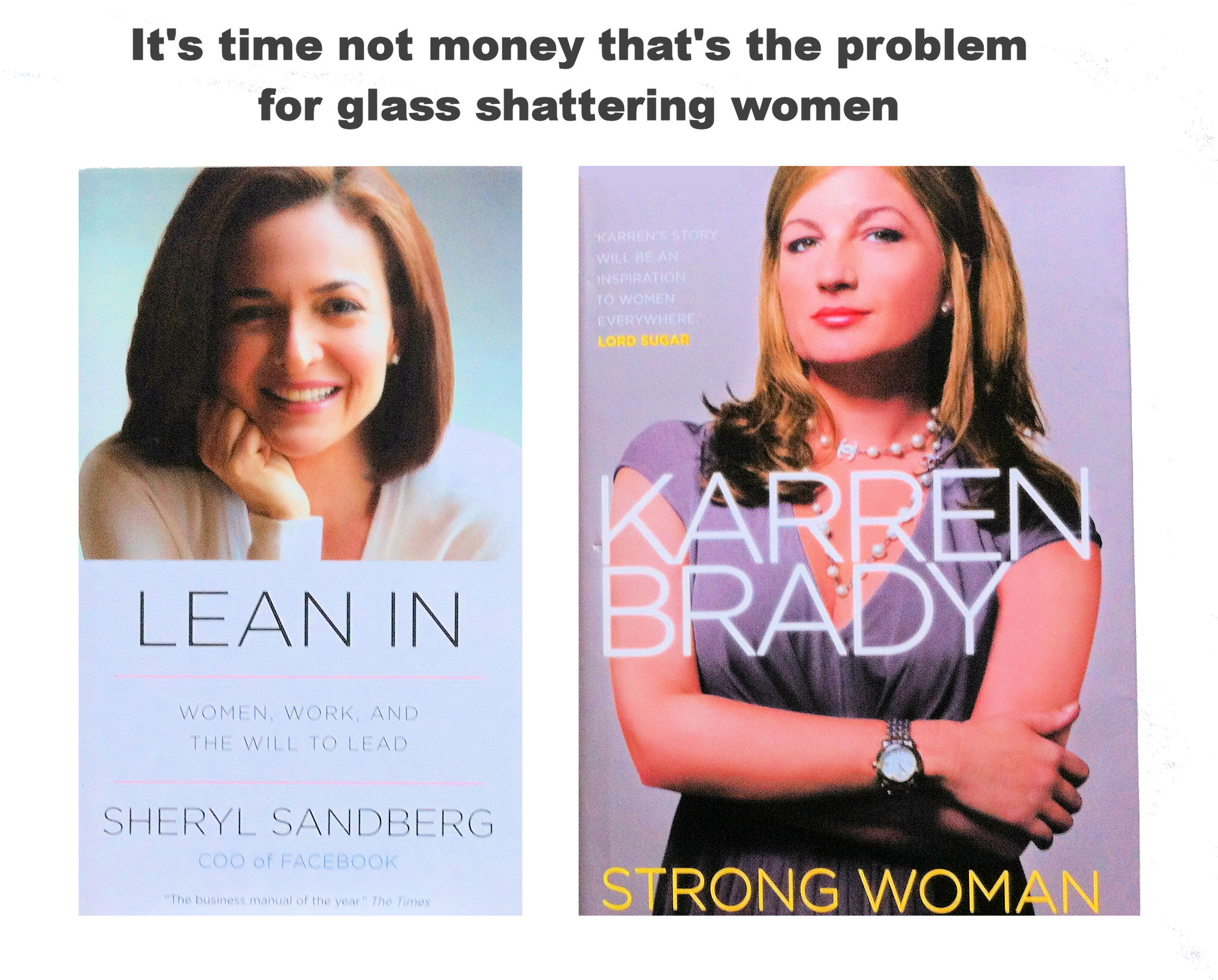
All 3 main political parties in the U.K. seem to be falling over themselves to offer “affordable childcare” and “wrap-around” childcare. That way both sexes can have a career and the government can get more tax revenue and pay less welfare support. So popular is this mantra that “affordable childcare” is the purported solution for everything. Celebrity business woman Karren Brady’s solution to lack of female FTSE 100 board members? Affordable childcare.  How to tackle lack of social mobility? Affordable childcare. How to get people off benefits? You guessed it – affordable childcare. It is incredulous that one social policy is supposed to do all of this. Even if it could be the solution, or part of the solution, what of the further problems it may cause? A generation of children, who become de facto parentless for the majority of their formative years.

Parenting matters

Child psychologists have been banging on about the importance of the early years in child development for ages. Yet; somehow the message has not filtered through clearly to people. It is very unpopular these days to espouse the needs of young children over their parents’ employment and career progression; but this does not negate the fact that the first few years of a child’s life have an important bearing on its future.

The science is clear. Cognitively, social mobility has ended before it has begun. At school start, children can already be differentiated by social class with those in higher social classes having better vocabulary and readiness to read. From an emotional perspective, attachment theory speaks of life long consequences of difficulties in early parent-child relationships. From a psychiatric perspective, almost 75% of adult mental health problems are in evidence by age 18 years, 50% by age 15 years (Kim Cohen, 2003). Intense research has focused on earlier and earlier periods in child development and indeed yielding associations between how a child is at age 3 years with later psychopathology (Maughan et al., 2005). Whilst genetics will undoubtedly play a part, most genetically sensitive studies (studies that take into account the effects of genes by using twins and family members) of conditions from depression to personality and intelligence, still indicate significant environmental contribution with early environment purported to be a “sensitive” or “critical” period where environment is particularly important.

To me, parenting is one of the hardest and most important jobs in the world. Successful parents should be revered and given a gold medal in my book. Following the devastation of typhoon Haiyan in the Philippines, a teenager whose mother, a doctor, had been killed was interviewed by the press. She commented “I want to be like my mother”, the interviewer said “A doctor?” she said “No, a great mother.” I love that quote. Being a doctor and a mother myself, I would far rather be remembered as a great mother than a great doctor, and mothers (and fathers) should be proud to identify themselves in this role, rather than solely for their occupation which seems so much so the case in our current society.

Although I personally believe that I am the best person to provide the care for my children and believe that parenting does involve sacrifices, I do not believe that parenting is about giving up your whole life for your children. This is neither necessary nor healthy. It typically ends up in resentment, over-involvement or some invested expectation in their outcome. Therefore, I chose to continue to work, but put limits in place to ensure that I was still there for my children. For me, this meant that I left work at 5pm every day[i] (my husband at 6:30pm most days at my insistence) and fully engaged with my children for an hour or two before bedtime (no phones, no screens, and no distractions) and spent the entirety of the weekends and holidays focused on them. No musical performance, school play, sports day, parents-in-school/ nursery activity for either child has ever passed without parental presence. This is very hard work as every working parent knows, but I think it is possible to generate enough quality time this way to sustain children’s needs. After four years of this, I went part time so I could pick my children up from school at least part of the week, but I have always continued to work.

By disentangling the importance of early parenting from the fear that this may mean requirement of parents to give up their careers, I think we would achieve a greater consensus in support of the value of early parenting. However, any support of non-parental childcare must come with the caveat that this does not negate the need for parenting. Those that chose to work, need to fit in the same quality parenting on top of their work roles. Childcare is not parenting, neither is reading the paper at the weekend while the children watch TV, or the crèche at the ski resort. If no ‘parenting’ is happening in the working week, it needs to be done at the weekends and in the holidays. Managing parenting and full-time work can be a hard ask, however given the rise in referrals to child and adolescent mental health services throughout the U.K., we can not afford to neglect the parenting message when we talk about increasing childcare.

My view is that there are better solutions to work-life balance than extensive childcare.

Rather than “affordable childcare”, we should be focusing on pushing for achieving a 50:50 split in domestic responsibility with our partners, flexible working hours, job-share, well-paid,  high status reduced hours jobs, family-friendly policies and innovating on new ways of working for both men and women.

Quality first

Childcare

I believe that the decision you make as to who looks after your children in the early years, is one of the most important decisions you will make in your life as a parent. The quality of the childcare is paramount whether it is provided by the parent, child-minder, relative or nursery. By quality, I do not just mean “safe”, but supportive, nurturing, stimulating, engaging and child focused. Many people think that as babies and toddlers “do not do much” that all they need is to be fed, watered, changed and kept out of danger. This is so far from the truth. At this age, brain development is happening at its most rapid rate ever and this is the purported time that environment will have the greatest impact. Quality is paramount; affordability is secondary.

Unless you believe that you can eat lots of cake and not get fat, then the idea of the government providing affordable “quality” childcare is laughable. Since when has the government or any private company been able to deliver “quality” on a shoestring? An acceptable product or service perhaps; but never the highest quality. I’m all for saving money; I pick meat out of a fish head to make fishcakes; yet, when it comes to childcare, I’m not doing budget or flat-pack.

I’m savvy enough to realise that not all that is attached to a high price tag is high quality. In fact, in my view the bulk of expensive stuff is not worth the money. However, where a truly high quality product or service does exist, it generally is not cheap. There may be the odd exception, but when it comes to nurseries, I cannot imagine that there are anywhere close to sufficient “affordable high quality” state or privately owned nurseries to provide for the demand.

Provisional results from Ofsted on “Overall effectiveness: the quality and standards of the provision” of active early years providers at their most recent inspection (June 2013) found only 12% of 67,708 providers to be outstanding. If affordability is taken into account, it is likely that this percentage will fall below 10%.

My son’s Ofsted outstanding nursery is costing me a wapping £1,580 a month. I am happy to pay this princely sum because I know the value that I am getting[ii]; however, I am certain this is not what the government means by “affordable”; given that a doctor’s substantial salary was wiped clean by having 2 children in childcare at this price. It is also not as though the nursery is serving the children caviar for tea, but the majority outlay is to retain excellent and experienced staff. It is likely that like my children’s nursery, a significant proportion of the 12% of “outstanding early years’ providers” are not affordable for the majority of parents. Reflecting on these statistics one can only imagine the political parties’ election pledges of “affordable high quality childcare” are pie in the sky.

I have no problem with affordability, the lower the price the better, the more government subsidy the better; but the emphasis needs to be on “high-quality” childcare before we can even think about affordability.

Breaking glass

Lean in

I cannot fathom how affordable childcare is going to lead to the ascent of womankind. I do not agree with Sheryl Sandberg (COO of Facebook) that there are scores of able women out there who slack off on their careers waiting on “Mr Right” to come along and give them babies. Rather the opposite. My generation (born 1975-1985) of successful women were outsmarting their male counterparts throughout school and University and equalling men on pay through their twenties. For me, it was only at the time of pregnancy and childbirth with my first child that the realities of the unequal society we live in slapped me in the face, and at the birth of my second child that I realised that my pre-natal ambitions of becoming a “Professor in Child Psychiatry” were toast. Lack of ambition, “leaning in” and “affordable childcare” were not the problem. As a female colleague of mine put it “I didn’t think I needed to be a feminist as things were equal, until I had a baby and then I realised that they weren’t. Then I was too tired to be able to do anything about it.”

If we are looking on women to shatter-glass, we are talking about the high flyers. The fact stares you in the face. For the majority, THESE WOMEN CAN AFFORD CHILDCARE! It is NOT affordable childcare that these women need. Instead, high-flying mothers are faced with inflexible corporations that value an ethos of face-time over productivity, demanding the lives of their employees (male and female) to be at their mercy. Fortunately for the senior male employees seeking favour for promotion, they usually have a wife that has subsumed the entirety of the parent role so that they can be ever available to their male bosses who also have wives that allow them to be ever present at work to oversee the tyranny. A survey of top executives in the U.S.A found that while 84% of men were married with children, only 49 percent of the women were (Mason, 2013). That statistic says it all.

High flying mothers (and fathers) who wish to see their children are forced out at this stage to the detriment of the nation’s economy and investment already made in this talented pool of people. Amongst my peers, Christina, a high flying lawyer took a redundancy package. This was despite a tax-payer funded law degree from Cambridge University. She is doing contract legal work on an ad hoc basis, but by no means utilising her full qualifications and potential. Kerry, a London Business School MBA graduate turned down a 6 figure salary at a multi-national to look after her children. She had a tax-payer funded humanities degree from Oxford University. Daisy, an executive at a major internet company gave up her 6 figure salary to look after her children, despite a degree from North Western, U.S.A. The cynical will interpret this to mean “We shouldn’t waste money on educating women”, but these women are better at their jobs than a majority of men. They could have participated in growing the economy and contributed to better decision making in mixed-sex boardrooms, had they been given more options.

They are all great mothers with really lovely children, so who can blame them for downscaling their career ambitions for the sake of their families. The decision to give up a career is ultimately a “personal and family decision”, but I believe that outdated societal roles, laws and policies have a huge part to play in this, pushing women between a rock and a hard place when making their “personal decision”. The wasted talent is there for all to see if people would stop turning a blind eye and calling it a “personal decision”. Most women given the choice between a bullet to their head or the head of their child would choose a bullet to their own head. This does not make the act a “personal choice”. Women’s roles and ambitions have changed, but men’s roles and ambitions remain exactly the same. If women were to adopt the same attitudes as men regarding their careers, ultimately, the children would suffer so I am glad that most women have not seen “masculinization” as the solution to inequality.

It was at the point of my second pregnancy, at the realisation that my career ambitions had to change that I felt supremely conned by the message that I had heard loud and clear at my high-flying all-girl’s school: “aim high”, “achieve”, “women can succeed in all walks of life now”. I wondered whether at the neighbouring boy’s schools they had teachers telling them “you too can have a loving relationship with your children”, “you can get to know your children and be the most important person in their life” and somehow, I didn’t think so. I wondered why, as a woman of substantial salary, albeit lower than my husbands, I felt immense pressure to be the parent that was there for my children and to subsume the childcare responsibility role? Many men in my position, such as Mr Blair and Mr Clegg (famous for having more financially successful wives) clearly had no such problem. It doesn’t matter how much women earn or how successful they are, society still seems to view childcare (whether the direct provision or supervision) as the woman’s domain. I know for a fact that my children’s school and nursery will call me first, rather than my husband, for anything related to our children, even though they have both our numbers. He will only get a call if I am unavailable.

It is no wonder that men, including many of our own beloved husbands, are blissfully happy with their lot. Fearful of the coming tides of change that will inevitably drag them out of their offices and into the kitchens, they offer up childcare as the solution, more and more and more of it. At what cost to children and family life?

At present many a successful woman is saying “No” to this, opting to take the hit on their own careers. This is the “White Elephant” in the room; the last hiding place of “sexism”. It is not just the white haired man sitting opposite women in the boardroom that is ignoring the taps at the glass ceiling. It is also the greying man snoring next to them in the bedroom. Whilst most men are doing more with their children than their fathers, the majority are way off doing 50% of childcare.

In conclusion, I hate “affordable childcare” because it is merely the sound-bite solution politicians are offering to sweeten voters (largely female) who are concerned about equality. It is neither realistic nor the real solution that we seek. Social mobility will not be aided as unless childcare is free, the supermarket checkout lady will still be unable to afford it. Retaining excellent women will not be helped if women wish to be actively involved with their children. With affordable childcare, a majority of middle class families may break even with salary covering childcare, a minority of middle class families may have more money in their pockets; but at what cost to family life, parental and child wellbeing? Extensive childcare passes the buck from women to children, when ideally this load should be shared between women, men and society. Thankfully, times are a-changing. I feel that I am at the start of a new generation of women with increased power in the home and workplace who will insist on change and with the advent of shared parental leave; one can only hope that this is the start of a flood of legislative change that may mean that my daughter, as well as my son, will fulfil her ambitions.

I repeat: We should be focusing on pushing for achieving a 50:50 split in domestic responsibility with our partners, flexible working hours, job-share, well paid, high status part-time or reduced hour  positions, family-friendly policies, and innovating on new ways of working for both men and women.

References:

Kim Cohen, J., Caspi, A., Moffit, T.E., Harrington, H., Milne, B.J., & Poulton, R. (2003). Prior juvenile diagnoses in adults with mental disorder. Archives of General Psychiatry, 60, 709-717.

Maughan, B. & Kim Cohen, J. (2005). Continuities between childhood and adult life. British Journal of Psychiatry, 187, 301-303.

http://www.ofsted.gov.uk/inspection-reports/statistics

Mason, M. (2013). In the ivory tower, men only. www.slate.com, June 17, 2013


[i] You might say, “Well, you are lucky that you can leave your job at 5pm, but I can’t.”; but the truth is that you “can’t” in my job either (prior to having children, I was regularly at work till 6:30-7:30pm), but I just did. Did my employers care? Hell yes! Did I care? Well, yes of course, my glowing career prospects were severely tarnished; but offer me the choice again of “tarnished career prospects” and “absent parent” and I will make the same choice again. My husband is a banker; and “Yes”, even they can leave on time if you nag enough. I told him to go to work as early as he liked, 5am if need be, but to leave on time to preserve time with HIS children.

[ii] What difference can quality make? I learnt the hard way. Having experienced sending Big Sis to a nursery that I was dissatisfied with, which later received an Ofsted “satisfactory” report, and then changing her nursery to an Ofsted “outstanding” nursery the difference was marked. I will give you just one example but there were many others: Big Sis was bitten or scratched by other children in her class at least 10 to 15 times in her 18 month career at her first nursery. Other children in her class were also being bitten and scratched and we parents almost had to form a line to sign the incident forms when we collected our children. We would be told that a new toddler had been admitted to the class who had not yet been “socialised” by the nursery but that they would get the child under control soon. Only then, they would admit another “unsocialised” child. Eventually I had to sign an incident form saying that Big Sis had bitten another child (although she never bit anyone at home), and to tell the truth, I was rather glad that Big Sis was retaliating rather than being a teething ring for the other children. After Big Sis transferred to the Ofsted Outstanding nursery she was bitten once and scratched once in a period of 28 months. She didn’t bite anyone. Lil Bro, who has only known the outstanding nursery has never been bitten or scratched and has never bitten another child at nursery. He has bitten his sister at home so it is not as if he is a particularly placid non-biting child. In my experience, biting is a very normal aggressive reaction in children and most children in the 0-3 year age group will do it at some point. Initially when Big Sis was being bitten at nursery, I was sympathetic to the nursery as I am aware that “all children bite”, however, on witnessing how much less this type of behaviour was occurring at a well- run nursery I am pretty sure that the level of biting was related to the nursery’s care.